
Ways To Wellness

A four-week health education programme
In development, launching soon.
Nutrition is a difficult field to navigate. There's no shortage of science, but studies contradict each other, and most of what reaches us comes from people advocating one path and dismissing every other. Carnivore against vegan, fasting against regular meals, saturated fat as a villain or as a staple. It's hard to know what's solid, what's contested, and what's simply someone's conviction dressed up as fact.
Ways to Wellness takes a different approach. It brings together perspectives and studies from across the spectrum, and tries to paint a clear and fair picture of where things actually stand.
Knowing what to do and actually doing it are two different things. So the programme also makes room to look at the habits we've inherited and the patterns we repeat - drawing on therapeutic frameworks to open up honest questions about our ways of being, and showing what a real shift forward might look like. That reflection is yours to take as far as you want to.
The programme explores how nutrition, our environments and daily habits shape physical, emotional and mental wellbeing, and translates research into practical, achievable changes.
The programme is delivered online and commissioned for groups rather than individuals, so a whole team moves through it together and shares the same language afterwards.
The structure: a one to two hour workshop each week for the first three weeks, with an hour held open after each session for questions and discussion. Week four is a personal one-to-one call for each participant, where we take everything covered and weave it into a path that fits their own life.
Week 1 — Environment and everyday exposures. Household and environmental toxins, including volatile organic compounds, which can cause hormone disruption and affect the endocrine system. Damaged and toxic cookware, and what it can leach into food. Everyday food and drink staples worth reconsidering - table salt, bread, tap water, seed oils and fats damaged by cooking past their smoke point - alongside herbicides, pesticides and glyphosate, and where they show up most in what we eat. We also evaluate artificial sweeteners, food dyes, E numbers and "natural flavourings", and what's actually behind those labels. How to reduce your exposure to microplastics, heavy metals and fluoride, and why each can be damaging to health. We also look at EMFs and LED lighting, and the effects these are understood to have on the body. The week closes with simple habits that can positively shift your health.
Week 2 — Food. An honest survey of the major diets and what each offers, and how to make sure you're getting the essential vitamins and minerals your body needs from natural sources, whichever way of eating you follow. We look at some of the most nutrient-dense foods on the planet and how to bring them into everyday eating. Just as importantly, how to prepare them properly, from soaking and sprouting to reduce anti-nutrients, to simple ways of limiting pesticide residues on what you buy. We also cover plant tools and breathing techniques that support nitric oxide production, helping oxygen and blood circulate more freely around the body, and the importance of mineral balancing and how to approach it through food rather than reaching for a pill. Alongside this, the Ayurvedic principles of food combining - which foods work well together and which are better kept apart - fasting and its pros and cons, and how to work with your circadian rhythm rather than against it.
Week 3 — Cleansing paths. Supporting gut and liver health, and the body's own detoxification pathways. Working with each organ in turn, understanding the terrain, and using lymphatic drainage and myofascial release to help the body do what it's designed to do. We also look at each organ through the lens of Chinese medicine, which associates each one with a particular emotional energy. Where those energies feel stuck or overwhelming, we cover plants and practices traditionally used to support them.
Cleansing isn't only physical. Food is one of the first places we learn to soothe ourselves, and one of the easiest coping mechanisms to build without noticing - which is why changing how we eat is so much harder than knowing what to change. Drawing on ideas from therapeutic frameworks like Non-Violent Communication, authentic relating and Internal Family Systems, we look at the patterns we've inherited and the relationship we hold with ourselves, and ask the questions that reveal how that relationship has shaped the way we eat.
Week 4 — Weaving your own way. A one-to-one call with each participant, taking everything from the previous three weeks and shaping it into something personal — holistic, sustainable, and working with nature rather than against it. Group learning only goes so far; this is where it becomes yours.
What you keep
The programme runs for four weeks, but it isn't really a four-week course. Four weeks gives you the map. Walking it takes longer, and the material is there to come back to whenever you need it. Different parts of it land at different stages, depending on where you are. Whether you're starting from scratch or have been at this for years, there's plenty here that opens up fresh angles and paths you may not have considered.
You'll also come away with a set of resources: the suppliers I use and trust for herbs and plant medicines, so you're not left trying to work out what's genuine and what isn't. As with anything in the programme, use your own judgement and check with a healthcare professional where it matters - particularly if you're taking medication.
And if something here opens a door you want to walk further through, I'll point you toward teachers worth learning from across health, nutrition and the wider field. Not one school or one approach, but people I rate in a range of different paths.
Finally, the programme is a chance to meet others doing this alongside you. Change is far easier with people around you who are attempting the same thing, and where participants want it, there's real value in setting goals together and holding each other to them.
There's no single right way to eat, live or heal. What there is, is your way - and this is the ground you build it on
Ways to Wellness is an educational programme. It isn't medical advice and isn't a substitute for care from a qualified healthcare professional.
Weave your own way
Offering one-to-one guidance in nutrition, cleansing, movement and tantra
Not tantra as the West has come to know it, but the esoteric tradition it belongs to — concerned with expanding consciousness and attaining liberation. The word comes from tan: to stretch, to weave... tantra is a thread.
That's the shape my life has taken. A long weaving of practices that develop mind, body and spirit. Drawing ancient knowledge together with modern understanding — Buddhism, Taoist thought, Chinese medicine, Ayurveda and myth from across the world, alongside philosophy, science which focuses on human biology, astrology, quantum physics, psychology and therapeutic frameworks such as internal family systems.
My deepest love has been for the esoteric traditions. I spent years dancing with Shiva and Shakti through the study of mantra and the development of kundalini energy, along with working with the Kabbalah and the tree of life.
I don't belong to one school and I won't ask you to. Everyone's weave is different. I'm here to help you clear what's in the way, find the threads that are yours, and create your own beautiful life tapestry.
Your path won't look like mine, and it shouldn't. But if we share the same end goal — to live as a jivatman, a living soul with purpose, and to be in satchitananda: truth, consciousness and bliss — then I'd be glad to be your guide.
If you're ready to start pulling on your own threads, get in touch.
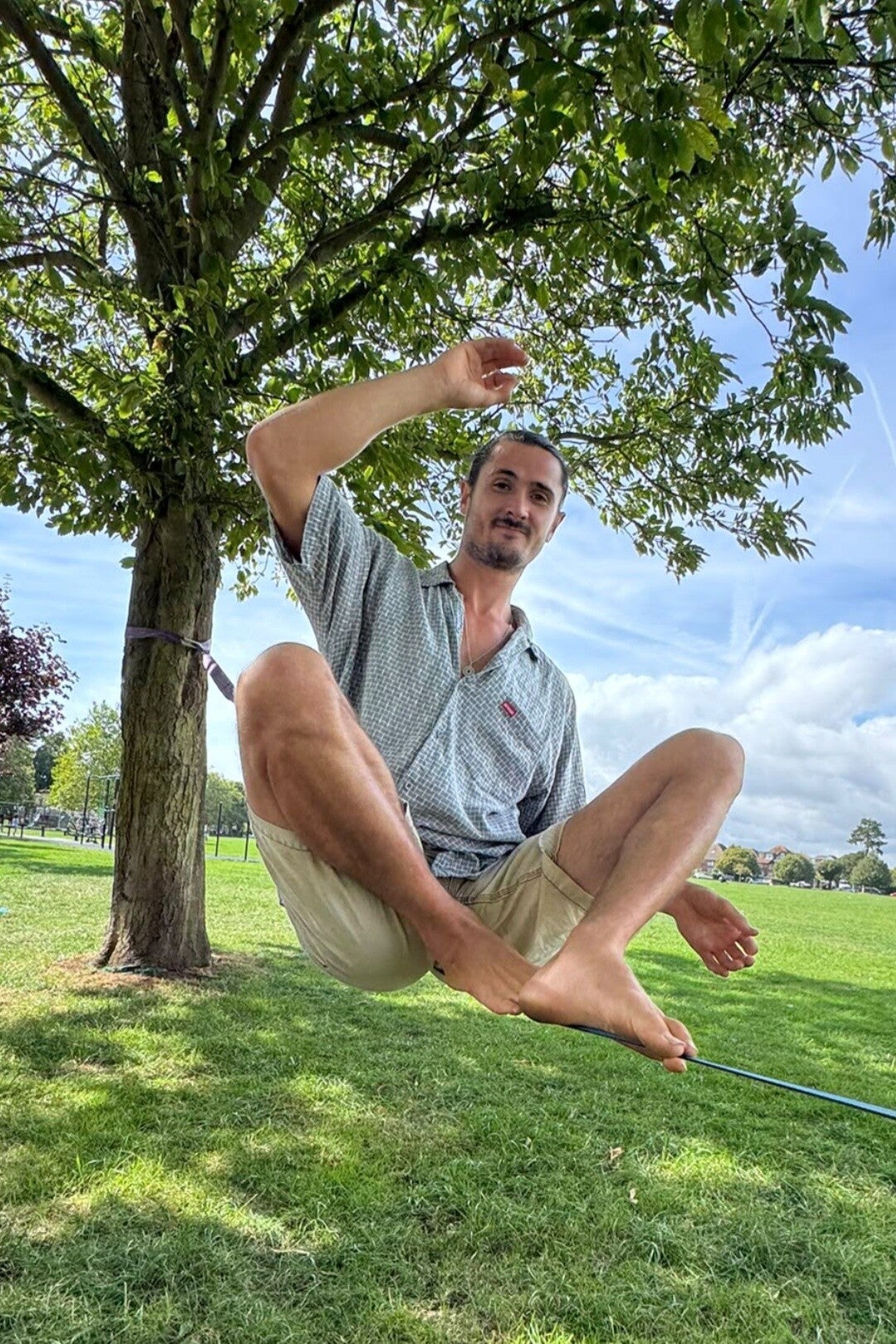
About the teacher
For over four years I've supported children and adults with learning disabilities in supported living households. The work on myself started well before that.
Over the last seven years I've come through numerous cleanses and fasts, undoing the damage of a lifetime spent living carelessly. The desire to heal took me deep into nutrition, herbal medicine and foraged foods — and alongside diet, into movement, breathwork, meditation, music and art.
None of it came from a course. It's been trial and error from the start, and I've gone down just about every path there is to get here — water fasting, dry fasting, enemas, liver flushes, candida and parasite protocols. I've tried it all, and I've learned as much from what didn't work as from what did.
That's partly why this matters to me. There's a lot being promoted online now — intense protocols, shared without much thought for who's picking them up or what state their system is in. Some of it is genuinely overwhelming for a body that isn't ready.
What I offer is a way to navigate all of it sensibly: what these approaches actually do, where they can help, where they can harm, and how to build the ground first so the body can handle what you ask of it.
Everything I teach, I've walked myself first. The hope is that you don't have to take the long way round like I did.